
Flood and Storm Damage Cleanup in Harrisburg, PA
Harrisburg sits on the Susquehanna River, with Paxton Creek and other waterways running through and around it. Heavy rain, rising creeks, and storm runoff have put water into basements, streets, and first floors across the region before, and the riverfront neighborhood of Shipoke is a known floodplain area that flooded during Hurricane Agnes in 1972 and again in 2011. Harrisburg Restoration Pro helps property owners recover after flood and storm events: we remove water, mud, and debris, clean what can be cleaned, and dry the building so repairs begin on dry materials.
Flood water is not clean water. It can carry soil, chemicals, and sewage, so we use protective equipment and clear safety steps.
- 24/7 Emergency Calls
- Free Estimates
- Licensed and Insured
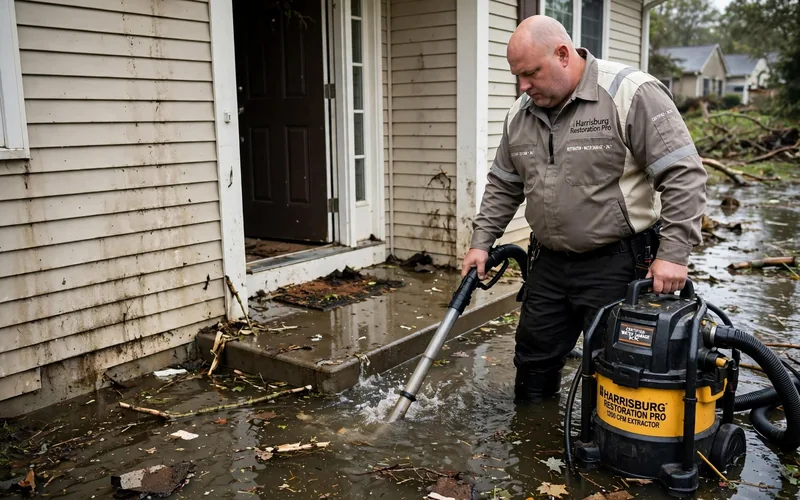
What We Clean Up After a Flood or Storm
- Standing water in basements, first floors, and garages
- Mud and silt left behind by receding water
- Soaked carpet, padding, drywall, and insulation
- Water that came in through windows, doors, or damaged roofs
- Storm runoff pushing in around foundations
- Sewer and drain backups during heavy rain
Common Flood and Storm Problems Here
River and Creek Overflow
Rising rivers and creeks can send water into streets and low-lying buildings. Neighborhoods near the riverfront and waterways face more of it.
Heavy Rain and Runoff
When storm drains cannot keep up, water pools against foundations and finds its way in.
Sewer Backups in Wet Weather
Over half of Harrisburg's sewers are combined sewers, which carry stormwater and wastewater together and can overflow during wet weather, according to the city's utility. When a line backs up into a building, the water is contaminated.
Wind-Driven Rain and Roof Damage
Storm winds lift shingles and loosen flashing, and rain follows into attics and ceilings.
Flood and Storm Damage Cleanup Near You in Lemoyne, PA 17043 and Harrisburg
We serve Lemoyne, ZIP code 17043, and the other West Shore communities, as well as Harrisburg and our wider service area. If a storm or flood has hit your Lemoyne property, or a home or business near the river in Harrisburg ZIP codes such as 17102, 17104, and 17110, send us your street address and a quick description.
Safety First After a Flood
- Stay out of flood water. It may be contaminated or electrically energized.
- Keep power off in wet areas until an electrician says it is safe.
- Do not use gas appliances or the furnace if they were flooded without a professional check.
- Wear gloves, boots, and eye protection if you must handle debris.
- Follow local officials on evacuation, water safety, and re-entry.
- Photograph everything before cleanup begins.
How Our Flood and Storm Cleanup Works
Assess and Stabilize
We check safety hazards, look at how far water reached, and decide what to remove first.
Remove Water and Debris
Pumps and extractors clear standing water. Mud, silt, and debris are removed from floors and surfaces.
Remove Contaminated Materials
Porous items soaked by flood water, such as carpet, padding, insulation, and wall board, are often removed because they are hard to clean.
Clean and Sanitize
Remaining surfaces are cleaned and sanitized with the right products for the contamination.
Dry the Structure
Air movers and dehumidifiers dry the building until moisture readings meet the dry standard.
Flood Insurance and Documentation
Many standard homeowner policies exclude flood damage, so ask your agent whether you have separate flood coverage. Photograph the damage, keep receipts, and write down what you throw away. We provide moisture logs and notes for your claim.
Next Steps After Cleanup
When the building is dry, you can plan repairs. If the water carried sewage, see sewage backup cleanup. If it came from the ground up, our basement water damage page covers that.