
Structural Drying and Dehumidification in Harrisburg, PA
Pumping out the water is only the first half of recovery. Water left in plaster, framing, subfloors, and insulation will not leave on its own in a closed-up house, and what stays behind turns into swollen trim, peeling paint, stale odors, and mold. Harrisburg Restoration Pro dries wet buildings across Harrisburg with controlled equipment and written moisture readings, so you can see the structure return to normal.
You will not have to take our word for it. We show you the numbers at every visit. Estimates are free.
- 24/7 Emergency Calls
- Free Estimates
- Licensed and Insured
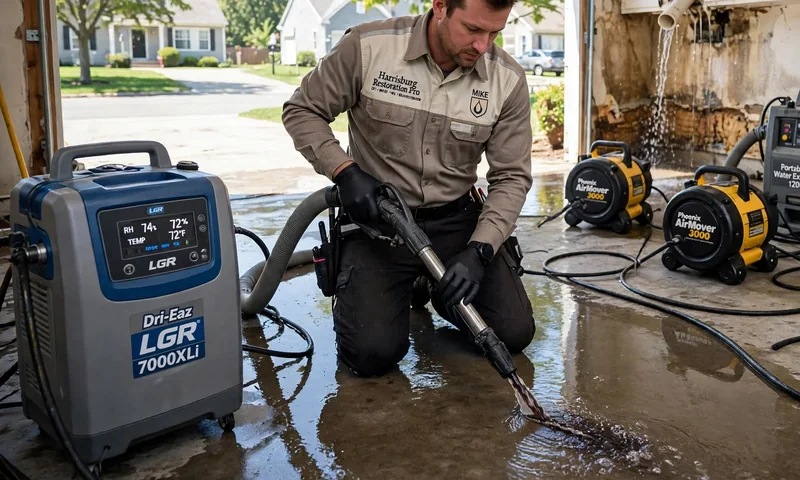
How Drying Really Works
Evaporation needs three things: air moving across a wet surface, warmth, and air that is dry enough to take on more moisture. A house after a flood has plenty of water but humid air that cannot absorb any more. Professional drying fixes that by moving air to lift moisture off the materials and by running dehumidifiers to pull that moisture out of the air and carry it away as liquid. Without the second step, moisture just migrates to other rooms, ceilings, and closets.
Why Open Windows and Box Fans Fall Short
- Outdoor air in a damp season can be as humid as the air inside.
- Box fans do not reach wall cavities, under cabinets, or beneath flooring.
- No one is taking readings, so no one knows when the job is truly finished.
- Heat alone speeds mold growth as much as it speeds drying when the moisture stays in the room.
The Equipment We Bring
Air Movers
Low, high-velocity fans aimed across floors and wall bases lift moisture from the surface and force air into corners.
Dehumidifiers
Refrigerant and desiccant dehumidifiers remove moisture from the air so the building keeps releasing water.
Cavity and Floor Drying Systems
Where water hides inside walls or beneath floors, small openings and hoses can push dry air into the space without tearing everything out.
Meters and Thermal Imaging
Moisture meters put a number on wood, wall board, and concrete, and a thermal camera marks cool, wet zones that need extra attention.
Structural Drying and Dehumidification Near You in Harrisburg, PA 17109
If you live or work in Harrisburg ZIP code 17109, or in nearby ZIP codes such as 17110, 17111, 17112, and 17104, we can set drying equipment in the wet part of your building. Share your address and the rooms involved, and we will outline what a drying plan looks like for your situation without making up a deadline.
How a Drying Job Runs
Establish a Dry Standard
We take readings in the wet areas and in an unaffected area of the same material. That dry reading becomes the goal.
Set Up the Drying Zone
We close off the affected area where we can, so equipment dries the wet rooms and not the whole building.
Place Equipment by Measurement
Air movers and dehumidifiers go where readings and the layout say, not by a fixed formula.
Return and Re-Measure
Every visit brings fresh readings, equipment adjustments, and a logged update. Some materials give up water fast, while others take their time.
Confirm and Remove Equipment
When wet materials read like the dry reference, the job is done and the equipment leaves.
Building Materials Dry Differently
Plaster and Lath
Older walls found in many Harrisburg homes hold water in the plaster and the wood behind it. We monitor carefully and avoid cutting more than necessary.
Drywall
Some wall board dries in place. Board that has softened or soaked up dirty water is better removed and replaced.
Solid Wood and Subfloors
Floors and subfloors can sometimes be saved with controlled drying, though not every floor responds. We tell you honestly if one will not.
Brick, Block, and Concrete
Masonry and slabs hold water for a long time. Steady dehumidification and patience are the main tools.
Insulation and Framing
Wet insulation presses water against studs. We dry it through cavity systems when possible and remove it when not.
Signs Drying Was Cut Short
- A damp, stale odor returning after floors feel dry
- Trim or baseboards curling away from the wall
- Paint blistering weeks after the leak
- Hardwood that crowns or gaps
- Indoor humidity that stays high without an obvious reason
What Comes After Drying
When readings match the dry standard, repairs can begin. Mold already showing? Read about mold remediation. Water still on the floor? Begin with water extraction and removal. Other common questions are answered in the frequently asked questions.